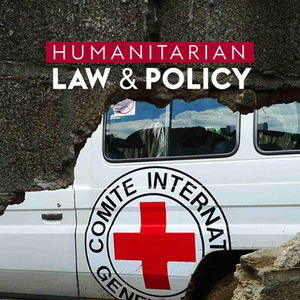
The brutal effects of war have long prompted efforts to limit suffering and preserve humanity in times of conflict. Across cultures, religions, and legal traditions, people have sought to restrain violence and preserve a measure of humanity in conflict. Yet the emergence of modern humanitarianism in the nineteenth century marked a turning point: compassion became increasingly organized, codified, and institutionalized. Against the backdrop of industrialized warfare, technological change, and growing public awareness of battlefield suffering, new forms of humanitarian action began to take shape.
In this post, ICRC experts Anastasia Kushleyko, Cédric Cotter, and Ahmed Al-Dawoody revisit the contributions of Swiss businessman Henry Dunant, Russian philanthropist Anatole Demidoff, and Algerian scholar and leader Emir Abdelkader. Through their efforts to protect prisoners of war, care for the wounded, and uphold humane treatment during conflict, these three figures demonstrated that humanitarian principles were neither confined to one region nor rooted in a single tradition. The authors argue that modern humanitarianism emerged through converging ideas, networks, and practices across different societies, and that revisiting these histories can help reaffirm the universal character of humanitarian principles today.
Podden och tillhörande omslagsbild på den här sidan tillhör
ICRC Law and Policy. Innehållet i podden är skapat av ICRC Law and Policy och inte av,
eller tillsammans med, Poddtoppen.