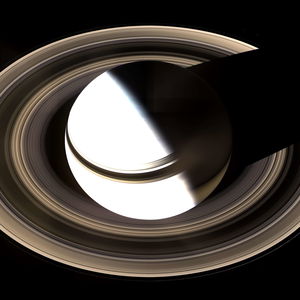
In 2005, NASA's Cassini spacecraft made a groundbreaking discovery—it found massive plumes of ice and gas erupting from the south pole of Enceladus, a small but geologically-active moon of Saturn. These plumes are now believed to originate from a subsurface ocean of liquid water beneath the moon’s icy crust, with conditions compatible with life, as we know it. The talk focuses on our current understanding of Enceladus' plume and subsurface ocean, and on past and future strategies to search in them for possible evidence of life.
Alfonso Davila is a Research Scientist in the Exobiology branch at NASA Ames Research Center, where he helps develop strategies to search for evidence of life beyond Earth.
Podden och tillhörande omslagsbild på den här sidan tillhör
Silicon Valley Astronomy Lectures. Innehållet i podden är skapat av Silicon Valley Astronomy Lectures och inte av,
eller tillsammans med, Poddtoppen.