Introduction
Most carriers are still running underwriting on policy admin systems built three decades ago — stitched together through a hundred acquisitions and never designed to work with AI. Federato is betting the only way to fix that is to replace it entirely.
William Steenbergen is the co-founder and CTO of Federato, the first AI-native platform built to cover the full commercial insurance policy lifecycle. He started in reinforcement learning research before spending five months in a cabin in Idaho interviewing underwriters until he understood the problem well enough to build a solution. Federato has since raised $100 million from Goldman Sachs and is now live across commercial lines from SMB to large enterprise.
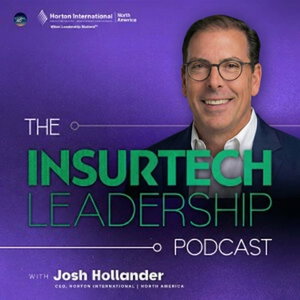
In this conversation, Josh Hollander and Steenbergen dig into why bolting AI onto legacy systems keeps failing, what the underwriting workflow looks like inside an AI-native platform, and why Federato has started turning away customers who aren't ready to make the full switch.
Guest Bio
William Steenbergen is the Co-Founder and CTO of Federato, an AI-native platform covering the full commercial policy lifecycle — from email submission through rating, quoting, binding, issuance, endorsements, and renewal. He conducted reinforcement learning research at Stanford before co-founding Federato in 2020, spending over a thousand hours interviewing underwriters before writing a line of code. Federato raised $100 million from Goldman Sachs in 2024.
Key Topics
Why legacy systems can't run AI agents — Old core policy admin systems have been stitched together through 100+ acquisitions. The data and tools don't live in a standardized way, making it nearly impossible for AI agents to access the context they need to act — not just summarize.
The three things an AI agent needs — An LLM, context (submission data, product definitions, claims history, forms), and tools it can interact with to take real action. Most incumbents can't provide all three in an AI-native way.
What underwriting looks like now — Ten minutes after an email submission arrives, the underwriter logs in to find it already quoted. They review the AI agent's reasoning, citations, and assumptions, then approve, adjust, or ask follow-up questions in plain text — structurally identical to reviewing a referral.
95% accuracy vs. a room full of humans — Federato ran a study comparing AI agent outputs to human underwriter decisions on the same policies. The agent matched humans 95% of the time and showed less variance than ten humans working the same policy independently.
Turning away the wrong customers — Federato now declines prospects who want to use the platform as a workbench on top of a legacy policy admin system. The only configuration that works is replacing the policy admin system entirely.
AI regulation and accountability — Underwriters still review and approve every AI-generated quote. The AI runs deterministic tools — the rater, the filed forms — it can only make mistakes on the inputs it sends, not the outputs those tools generate.
Notable Quotes
"We're not trying to tack on AI onto an existing process. We're re-envisioning what a good insurance and underwriting process actually looks like."
"When an AI agent interacts with the rater, it doesn't make up the premium. It still runs a deterministic rater. The tool is deterministic."
"If you're not subscribed to doing a full policy lifecycle in Federato and actually replacing your policy admin system, you're probably not the right customer for us."
Resources
Guest:
Federato: https://www.federato.ai
William Steenbergen on LinkedIn: (verify and add URL)
Host & Organization:
Joshua R. Hollander on LinkedIn: https://www.linkedin.com/in/joshuarhollander/
Horton International (USA): https://www.horton-usa.com/
Insurtech Leadership Podcast: https://www.linkedin.com/showcase/insurtech-leadership-show
Subscribe & Review
If you enjoyed this episode, subscribe on your favorite platform and leave a review. The Insurtech Leadership Podcast is available on YouTube, Apple Podcasts, and Spotify.