Dela
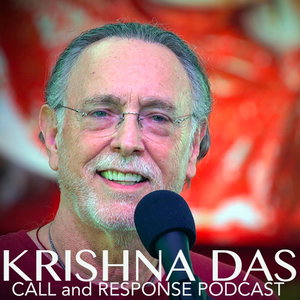
Call and Response Podcast with Krishna Das | Special Edition – Figuring Out What Works
This special edition comes with a special offer from our friends at SoHum Mountain Healing Resort ~
When life moves too fast, the body and heart begin to whisper for rest. Ayurveda is the science of life, teaching us how to live in balance with our true nature.
SoHum mountain healing resort offers Ayurvedic Pancha Karma detoxification retreats in a calm, supportive environment.
You can learn more at SoHumhealing.com and use the code KrishnaDasPK2026 for $500 off on your PanchaKarma retreat!
“It’s interesting because in the old days, before radio, Newspapers were the only way people got their news, and to do that, they had to go out and get it in the morning or get it delivered. So, whatever happened from one morning to the next morning, twenty-four hours, was nobody knew, right? Then came radio, and I was reading about how much it changed life. It completely changed the world, radio, because now you could go like this and hear what was happening as it’s happening, reported every hour and this and that. Now, it’s like we’ve got a chip in our brain, and we’re getting twenty-four seven, three sixty-five, you know?
I don’t know if that’s useful in any way whatsoever, but each one of us has to figure out what works for us, you know? But don’t– I wouldn’t beat yourself up for not reading the news. There’s other things you can beat yourself up for, I’m sure. Much more juicy and much more real and much more, you know, hurtful.” – Krishna Das
TRANSCRIPT:
Q: Jai Shri Ram, Krishna Dasji. My question is, so, when I sit alone doing nothing and-
KD: How can you do that? You’re never doing nothing. You’re just wasting time …
Q: Just wasting time, right?
KD: So, there’s a big difference.
Q: Yeah.
KD: Doing nothing would be fantastic. But how do we do that? Go ahead, sorry.
Q: No. S,o I have zillions of thoughts in my mind besides all the comfort, food, shelter, basic necessities that we have, right? And it feels empty from inside. And when I follow spirituality, chanting, going to the temple, all the rituals, it fills me up from the inside.
KD: It what?
Q: It fills me up from the inside because I am empty, right?
KD: So, it fills you up from the inside even though it’s from the outside. The temple is not inside, it’s outside.
Q: Okay.
KD: So, it fills you up on the inside from going to the outside.
Q: Yeah.
KD: How does that work?
Q: So, my question is, so, to you that when you sit alone and not chanting, not remembering anything, and you have had discussions with different gurus, different spiritual leaders, et cetera, right? So, what’s your thought in the mind? Any learning, any teachings that you want to share?
KD: When’s the next game from the UConn’s women’s basketball? That’s my only thought about anything at ever… any time
What do you care what I think? It’s what you think that matters. And you say you have millions of thoughts. I don’t see millions of thoughts. You have one thought, me, me, me, me, me, me. Everything revolves around that. So, when you notice you’re thinking, what do you do? You let go and you come back to the name.
That’s all you have to do. You don’t have to think about it. You don’t have to figure it out. It’s impossible to figure it out. And it doesn’t matter what anybody else says about what they feel. It’s what you feel that’s important. So, when you say you get filled up– when you say you’re empty, you’re not empty.
That’s a feeling, and it’s not like there’s nothing there. No, there’s a feeling of being empty. That’s a big feeling. So, let it go or just start the name going along with the so-called emptiness and see what happens. You have to do something at those moments. If you want, you can do something, which is to remember the name and try to pay some attention to it.
Don’t try too hard, but just gently try to remind yourself that you’re actually here. And when you become aware of the feeling, you’re aware of the feeling, so, you’re not the feeling, right? In that moment, you’re feeling empty. I’m empty. I’m empty. I’m empty. No, you’re feeling emptiness. You’re aware of that feeling. There’s a separation. There’s you and the feeling. So, you come back to the you side again and again
Good luck.
Q: I am a little, a little nervous here.
KD: Me, too. I have no idea what you’re going to say.
Q: I’m going to I’m going to do some nervous rambling before I ask my question. And I just want to say, I grew up in a Hindu family, and my parents are pretty religious, and we used to go to the Masonic Temple where they set up their Hindu, you know, temple there when I was, eight years old.
KD: Where?
Q: In Flushing.
KD: Flushing.
Q: On, next to Main Street. And I used to think “Who is this flying monkey god, this cartoon?”
KD: That’s what I think all the time.
Q: And all the years of growing up, I just, poo-pooed, you know, Hinduism. And finally, about five or six years ago, I got into Ram Dass and Neem Karoli Baba and you.
And it was 2020 during the COVID epidemic, and I just… I’m a writer. I like to write, and I wrote a short story, got published. You’re in it. And, and I would love for you to read it. I’d love to send it to you.
KD: Okay.
Q: But basically, I want to thank you and Ram Dass for, teaching this Hindu respect for Hanuman and coming back to, you know- her.
KD: Thank you.
Q: And I want to ask you, in all seriousness, I’m the mother of a, a primary caregiver for an adult with autism, and I want to know what Neem Karoli Baba would say. He has severe autism. What he would say about individuals that are born here… I’ve come to peace with, you know, who my child is, and he’s special and he… It could be part of my karma and…
KD: It’s his karma, for sure.
Q: What would Neem Karoli Baba say about it?
KD: I have no idea. Yeah. But ask him next time you see him.
I don’t know what he would say. It’s unimaginable to me what he would say because I’m not him.
I have a friend who teaches yoga. She had an autistic child herself. So, she developed this yoga program, asana practice for kids like that, and she always plays the chants for the kids, and they zone right in, you know what I’m saying? But then she said to me, “But when it speeds up, they get, they get nervous, and they kind of…”
So, that’s why I made that last CD called Peace of My Heart. It doesn’t speed up. It’s just, boring, you know, the whole thing. That’d be a nice thing to play for him because it’s steady and easy, and it’ll allow him to kind of zone right in.
Q: Yeah, I’ve played your music for him, and he loves it.
KD: Good. Yeah. just love, you know? That’s all, and just more of it every day.
Q: Hi KD. So, 10 years ago I came across the Ram Dass book, Be Here Now, and 10 years later, now I’m here flying from Brazil. My wife flew us here just to see you.
KD: Wow. From where? Which place?
Q: São Paulo.
KD: São Paulo.
Q: And I was there in your workshop as an attendant, and I learned something from you. You said something that it really, you know, carried, which was when you left India and came to the States, you heard from your beloved that you should or you would sing for people, but it took you 20 years to do so. And I’m struggling with something that I feel deeply in my heart that I should be doing for the past eight years. So, when I heard you saying that, I was “Well, if it took, if it took him 20 years, I mean…”
KD: 21 years.
Q: 21 years. Okay, so, you know, I still have a lot of time to, to go.
KD: Yeah. Good. So, chill.
Q: But in the same way, if you heard from your guru, and yet you still, took 20 years, what chance do I have? Because I don’t have my… I have my own feeling, intuition. So, what I want to ask you is, looking back, why do you think, what was holding you for that 21 years and what did change? When did you realize, or what action did you take, did you take to actually, you know, be here for us now? Thank you.
KD: Well, it took really recognizing that I wasn’t going to make it if I didn’t start to sing with people, period. That was it. I had an epiphany that if I didn’t start singing with people, I would never be able to clean out the dark shadows in my own heart. So, if it was either I did it or I didn’t do it. If I didn’t do it…If I did it…
So, I made the choice to start doing it because it was live or die, essentially. It got to that point. So, I wouldn’t say it was much of a conscious decision. It was more like recognizing the way things were, which was if I didn’t do this, it was over for me. You know, I just had a lot of, you know, when Maharajji sent…
I’d been in India two and a half years. He kept me there. He got my visa extended and all that. And then after two and a half years, he looks at me, he said, “Okay, time to go back to America.” I said, “What?” “Yeah.” “I’m just learning Hindi.” “Too bad. You have to go. You have attachment there,” he said. I thought, “What is he talking about?”
I gave everything away when I left America. I sold my car, my guitar. I gave my jeans away. I had maybe a small little box of books in my mother’s basement. I had nothing in America. I never wanted to go back. What was he talking about? Now I know. Every single thing that’s happened to me from that moment to this moment is what he was talking about.
My stuff had to come up, had to come up. I had to live through all kinds of shit, and somehow I’m still here. I have no idea how. But he saved my ass so many times. I don’t know why, but he did. So, you have to recognize what’s important to you. That’s all. But you can’t do it in here, you know? It has to be come from here.
You know, that’s all. And it doesn’t matter. I don’t know what it is. Maybe it’s not the right thing. You don’t know until you try. If you don’t try, you try. You don’t try, you try. Who knows? But, you know, maybe it’s just a trip you land on yourself to make yourself unhappy. We’re good at that. What if you didn’t have that thought?
Would you be happy as you are? Don’t answer, please. But you know what I’m saying. Who knows? But let’s see what happens. Let’s see how it goes.
Q: Hi. I find myself here curious about breath. I’m curious what you’ve learned from Maharajji or Maa about breath
KD: Nothing. Or less. Yeah, no, you know, one thing is, it’s good to keep breathing if possible. Aside from that, I don’t know anything about breath.
I remember Shyama, we were in the room with, with Siddhi Maa and Shyama. Siddhi Maa told Shyama to do asana and pranayama. Let’s see if I’m remember correctly. And then Shyama said, “Ma, I can’t do those asanas,” you know. So, Maa said, “Okay, Shyama, just do the pranayama. Krishna Das.”
Like that. So, since that moment, I’ve been doing pranayama. Other than that, I don’t know anything. But I do pranayama every day.
Q: I will keep breathing for a while.
KD: You hope, but I hope so, too.
Thank you Is that accurate? Semi-accurate? It’s the way I remember it, which is, of course, the only thing that counts.
Q: Hi, KD. Thank you so much for all you do. I had a very simple question. How has the practice of chanting transformed you as a person over these years, and how does it continue to do so, even today?
KD: It’s been incredible, just incredible. Now I don’t care that I’m just the biggest fucking asshole in the whole world. Before, I really cared. Now, I don’t give a shit. It’s almost true, too.
Q: Hi, KD. Namaste. I’m Siddharth. Me and my wife moved to the States last year, and I come from a city north of India called Lucknow.
KD: Oh, I know Lucknow.
Q: So, Neem Karoli Baba established a Hanuman mandir in Lucknow in 1960s. And as kids, you know, when we were, growing up, we used to go there. But then we used to listen to the bhajans that were being performed on the temple, you know, inside the temple.
It was very recent, you know, during the pandemic that I discovered you, and you happened to just come on my YouTube all of a sudden, out of nowhere. Nobody introduced me to you. You just happened to come on my YouTube, and since then I’ve been following you, and I feel more connected to both Guruji as well as, you know, Hanuman. Even more connected. I have an incident to share with you. So, I lost my mom during pandemic, and that is when I, you know, I found my peace with your bhajans. And a lot of chanting that, you know, we were doing at that time as a family.
Before moving to the States, you know, I just thought when we were preparing, you know, to move here, I just wished that, you know, before finally, you know, getting on that flight, I get a chance to visit, visit Kainchi. And you will not believe, just a month before my flight, all of a sudden we made a plan and we visited Kainchi. And it has been magical since then, because you know, I never thought that somebody would call me like that. You know, I have my flight. I have my packing going on, no plans at all, and then we just, you know, get gas in the car and we are on the road, and we are in Kainchi.
It has been magical for all of us. And you, I feel that you are the path that has led me to a better devotion, better connection, as well as understanding of all of these things at a level that probably was much superficial to me earlier. Because I used to hear it but then never feel it. Now I feel it.
My question to you is, in this world where we are so, busy and we are surrounded by so, many gods, especially in India, as you see it, what is devotion to you? Like my father calls me from India and he’s “Did you pray today?” So, I tell him that I pray, you know, as soon as I get up. I do my stuff. I start my day, and I try to pray, you know, whenever I get a chance. But then he’s “No, but that’s important.” So, what is devotion according to you? does it have a structure? Does it have a format? how do we feel that we are devoted to a person, a god, or a feeling, and then we are not, you know, probably parting ways just because we are so, busy in our lives?
KD: You know, Maharajji didn’t make us Hindus. He didn’t make us wear the same clothes. Basically, we didn’t even like each other, you know, the Westerners. Some, you know, there were little cliques, you know?
The Indian people would come, and he’d say, “You people, you come here. Oh, you only come for yourselves. Look at these people. All they want is God.” We look around, “Who’s he talking about?” You know? We had no idea what he’s talking… But that’s how he, he said that, you know? And we just wanted to be with him.
We just wanted to be in that love. That was our puja, that was our practice. That’s what my practice is right now. Chanting is just another way of becoming, entering into his presence. So, there’s, for me, there’s no particular form for it.
But you come from a different culture, and there’s expectations on you from that culture. You just have to see if it fits or not, you know?
I don’t think you should let yourself be pushed around and made unhappy by not fulfilling other people’s expectations of what you should be doing. But it’s difficult. I mean, if your father’s going to call you every day, you can change your number. But then he’ll probably get on a plane with a lathi.
But yeah, you have to figure out what works for you. Nobody can tell you.
Q: And I have one more question. While, you know, after I lost my mom, I changed as a person, and this was not told to me by my brother or by my father or anybody else, but my wife told me. Because we dated for a long time, and then my mother was there, and then after my mother passed away, I got married. So, she tells me that I’ve changed a lot as a person. And then she tells me that, “I think, Sid, you need to address the grief that you have within you.”
And I feel that too, that I haven’t addressed that grief because nobody ever talked about how I felt, how I feel till date, and maybe there’s a lot inside me, but then I am just being told that I need to address the grief. And in one of the workshops, or rather in, on the YouTube sessions that you took, I did ask you about this, that how do we address the grief? But I still am still looking for answers, like how do we address a grief which is within, and I mean, should we address it?
KD: It should be addressed. It should be.
Who knows, you know? there’s grief because we feel we lost something. and on one hand, it certainly looks like that. But if you look around the room, everyone has lost something or someone, if not many people. None of our great-great-grandparents is alive, not one person here. Right? And sooner or later, we’ll be in the same situation.Our great-grandchildren will say, “Yeah, I remember that guy. He used to make noise with this whole, this little squeeze box.”
So, it’s natural to have grief. We’re human. But you can’t let it push you around, and making it into a big thing “I’ve got to deal with this grief.” It’s natural to have grief. You live with it.
It’s also presence. When you’re feeling that grief, you’re feeling that person and you’re feeling their presence. So, the grief is keeping you away from the presence. But it’s natural to feel that. It does pass in time usually, unless you really dedicated to keeping it going, which many of us are. But you don’t have to. You know, remember this, when you think of somebody like that, somebody who’s left the body They haven’t gone anywhere. It’s just the body that’s gone somewhere. But because we identify with the body, it feels like a real loss for us, and we have to deal with that, because we feel that, but that doesn’t mean it’s a true feeling.
I mean, there’s a difference between a true feeling and a real feeling. The grief is true. You feel it, but is it real? What is it based on? It’s based on attachment, on the fact that you think you are who you think you are. But that’s just what it looks like. So, you can’t push it away. You can’t get rid of it. It’s not like something you can take out and throw away. It’s, it’s a… it’s part of you. It’s not a bad part either. It’s, it’s… there’s a richness to it, a, a longing, a sweetness sometimes, a presence, you know. It’s not a bad thing, but we don’t like it. So, but, you know, just be with it, and don’t believe everything everybody tells you for Christ’s sake, or for somebody’s sake. For your sake.
Q: Thank you, KD. I have a picture of Hanuman Setu for you, and I’ll get it to you there
KD: Thank you. I’ve been there many times. Thank you.
The manager of Maharajji’s temple used to be the head of the prison, the big- biggest prison in Uttar Pradesh. And there was this thing that happened in Kainchi, and so, Maharajji sent this guy. He said, “I’m sending you to central jail,” and he sent him to Lucknow to stay with the guy in them prison there.
Thank you. Very nice. Yeah, this is s beautiful Hanumanji. Okay, good.
Q: Hi, KD. Good afternoon. My question is, sometimes when we sit down to meditate or, you know, do name repetition, some days it’s very nice. You feel connected and you know, it’s all harmonious. But then there are days when it feels like a drag in the sense…
KD: Those are the good days
Q: Yeah, so, there are days where it feels like just going through the motions and not really…
KD: Yeah, those are the good days. The other days suck. You’re just lost in some little pleasant feeling, just bullshit. When you’re really in the nitty-gritty and it feels like shit, those are the good days.
See? Don’t you wish you didn’t open your mouth?
But I am serious. Don’t be attached to a pleasant feeling. It has nothing to do with it. What you feel when you’re doing practice is completely irrelevant. It has nothing to do with it. Nothing. I don’t know what I feel when I sing. Why would I even care? I’m going to be with the name. That’s all. I don’t know what that feels like. I couldn’t even tell you.
Q: Right, but there are days when you…
KD: But …
Q: When the mind will basically…
KD: But.
Q: Mind will revolt with all of its power.
KD: And you believe your mind, right? You believe your thoughts, right? Why?
Q: I’ll try not to.
KD: Don’t try not to. Just look at them and notice that you do. You can’t try to change it. But see what it is. And you, you let your thoughts eat you up, eat you alive, like some kind of vampire bats or something, you know? So, that’s when you just let go again and you come back to the sound of the name for a millisecond, then you’re gone again. But if you don’t come back again and again, then what are you going to do? You’re going to spend the rest of your life being eaten by your thoughts It’s up to you to pay attention, to use your will, to use your inner strength, find that place, and keep coming back to the home, back, back, back.
And when you feel like shit, notice it and come back to the name. When you feel, “Wow, this is a really good meditation, I feel really good,” let it go and come back to the name, because it doesn’t matter what you feel in those moments. The rest of the day we can be really stupid and like what we feel and don’t like what we don’t feel. Okay. But when you’re sitting, what you feel is irrelevant. You do the practice, then you go watch a murder mystery
Q: Thank you.
KD: Okay
Q: Oh, hi. I also, want to thank you for coming to New York. It’s sort of a little bit related to the last question. I find that, you know, I live in New York City, do a lot of pranayama meditation.
I try to stay, and then I come here, and I see you, and I do kirtan, and I’m like, “Okay, I got it.” But then it’s New York City, and I’m interested in the whole way that you’re cranky today or whatever because, you know, I also, work as a therapist, and so, I see all this stuff. It’s just stuff. So, I get, “Okay, it’s just stuff. It’s not real,” but everyone thinks it’s real, and I just wonder how I can bring the name and the repetition of the name just to everyday New York.
KD: You know Mark Epstein? You know who he is?
Q: Yeah, Thoughts Without a Thinker.
KD: Yeah. And once I think he was talking to Ram Dass and asked him for advice, and Ram Dass said, “Just see your patient as perfect.”
Right. And from there, you don’t need to fix anything, right?
Q: Can I keep saying the name all the time? I mean, is it, is it all the time like with you?
KD Can you? That’s up to you. I have no idea if you can.
Q: Yeah.
KD: But it would be good.
Q: No, I think is the answer, but yeah
KD: But I mean, you just got to start where you start, where you are. You can’t pretend you’re somewhere where you’re not, you know? Just whenever you remember, you can be with that sound of the name. You can take little moments during the day where you just drop into it. Even though your thoughts are going to still eat you up alive, you’re still paying more attention in those short moments.
And little by little, you get more familiar with being there, more accustomed to to just being there with whatever’s happening and not judging the thoughts, not getting carried away by them, which is very hard. I’m mostly carried away by my thoughts, mostly.
Q: And sometimes I get excited, and I want to, I want to tell people, “This is not real. Stop it,” but I can’t, I can’t.
KD: Because you think that’s real. Yeah. Then what are you going to do? That’s like standing on butter and thinking you’re a piece of bread. Well, I’m sure that means something to somebody. Good luck.
Q: Thank you so, much for your lovely bhajans and reflections today. I actually have a question, two questions that sort of tied thematically what I noticed in the questions and the responses. My first one is, do you fear death, and when was the last time you felt fear of death? And the follow-up,,,
KD: What time is it?
Q: And a follow-up is how do you distinguish between purpose, rest, and distraction in your activities?
KD: This is too advanced for me, I’m sorry. I have no idea what you’re talking about.
As far as the first part of the question, I figure it’s going to happen someday. But in the meantime, I just try to do the best I can every day. And, you know, basically, if I stub my toe in the morning, like the next week is ruined So, I have no hope of ever dying in a good way. It’s not going to happen. You know, I’m going to be pissing and moaning and freaking out and yelling and screaming, so, I don’t expect anything good. So, who knows?
Q: But do you fear it?
KD: I’m not smart enough to fear it. I mean, that would really be intelligent to have a fear of death. I’m too stupid. I just figure I’ll deal with it when it, when it comes the best I can. What can I do? They say the way you live is the way you die, and they say the only thing you can take with you is your state of mind. So, I do the best I can with my state of mind now, and hopefully when now is then, I’ll do the best I can. More than that, I don’t know what to do
Q: Ram Ram, KD.
KD: Ram Ram.
Q: My question is less spiritual, more phonetic.
KD: Frenetic?
Q: Phonetic
KD: Oh, phonetic.
Q: Phonetic. In the last couple of… Well, last night and today, I’ve heard you use the F-bomb several times. That’s perfectly fine with me.
KD: You should see all the, the emails I get from these little old Indian ladies, you know. “You are spiritual people, don’t talk like that. You should not do that.” And I know I’m doing the right thing.
Q: Well, that’s my question. I’ve listened to, to hours of your kirtan.
KD: I actually haven’t been cursing that much lately, until today.
Q: Okay. That being said, I’ve never heard…
KD: I think it’s the European vibe. It’s just kind of like bringing it out of me. Yeah, go ahead.
Q: I’ve never heard in all all your kirtans, in mostly, you know, other people’s as well- Yeah … I’ve never heard the F syllable. Is it just absent from Hindi, Pali? I’ve never heard, heard the F syllable. I know Jagat Singh sings a lot of songs that have the “ff” sound in it, but have you ever sang the “ff” sound?
KD: Well, in, in Hindi, it’s, it’s a P-H. It’s not “ff,” it’s ph. Really. Okay. So, phuck you.
Q: Thanks. I really needed this, and so, did the rest of the room. Thank you.
KD: Thank you for my talk. You can’t take me anywhere. I don’t know what’s going on here. Thank you. I must have shot some coffee up this morning. Okay. Hey.
Q: Hari Om, Krishna Dasji. So, I had all these questions in my head, and every time a question would come, you would end up answering it already.
KD: That is one of my siddhis.
Q: I know. I know. I figured that out. I figured that out. I was up there on the balcony thinking about Bhagwan Das. You answered the question on Bhagwan Das. Then I’m thinking about why me? You answered that. And then I always listen to my wife. So, my wife comes by, and she goes, “Aren’t you going to ask a question?”
And I was like, “Okay, I’ll ask a question.” So, a little bit of background. I’m initiated disciple of Swami Chidananda Divine Life Society, Swami Sivananda. In 1995, when I was with Guru Maharaj and Gurudev Kutir… There is a picture of Neem Karoli Baba. I’m sorry.
KD: Don’t b.e
Q: And Guru Maharaj said, he goes, “He’s coming.” I never understood why he said that Then, just a couple years ago, when I’d be washing the dishes, I would always be listening to Bhagwan Das’ version of the Hanuman Chalisa, and I’d be singing Neem Karoli Baba’s name. And then my wife, Jyoti… Oh, and that was my daughter, by the way, Shiva, who came up here. You’ve met all of us in Tarrytown a few times. I saw.
KD: Okay.
All right. And then what ends up happening is, my wife, she sees Neem Karoli Baba’s picture, and she started to cry. And so, now Neem Karoli Baba’s come full force into our house.
And I’m a medical doctor, and I’ve been, you know, and then I went to Kainchi Dham, and ever since then, my life has changed. You’ve already answered all my questions, so, I just want to say thank you. Thank you for giving us the kirtan, the name. Thank you for bringing the blessings. Thank you for making me feel closer to Neem Karoli Baba. Thank you. Hari Om..
KD: When you, when you say Guru Maharaj, who, who are you talking about?
Q: Swami Chidananda Guru Maharaj.
KD: Chidananda. Chidananda. Yeah … you remember the story?
Q: Yes. He made, he made hot milk for your Gurudeva.
KD: Yeah. Sure. I was there. I know.
Well, I’ll tell you soon. Tell you the story, so.
Q: Sorry, one more thing.
KD: Yeah, go ahead.
Q: I saw pictures of you with Swami Vimalananda.
KD: Oh, yeah. Swami Vimalananda was the one on my prayer bag. the Guru Maharaja’s photo and Swami… He’s the one who gave that to me. He was so wonderful. For some reason, he really loved me. He used to call me Krishna Das Maharaj. He would go like that. He was so sweet. He used to sing Hanuman Chalisa with this little electronic keyboard. It was just fantastic, really.
Last time I saw him in at Shivananda Ashram, he said, “Krishnadas Maharaj, this will be the last time we meet in these bodies.” And it was. He was a beautiful man, beautiful being
So, I think I had met Ram Dass in the winter of ’68, ’69, and then I went to a weekend at, one day on a weekend at Ananda Ashram, where Swami Sacchidananda was giving a talk, and I’d been to his talks before. So, he finished the talk, and He used to go, “Hari Om,” at the end of the talk, you know? So, I had my eyes closed. There was this other Swami sitting with him, and I was waiting for the Hari Om, and instead I hear, “Sri Ram Jaya Ram,” you know?
And I went, “Aah” like this. It was like everything… I was completely electrified, every part, every cell in my body. But I didn’t know who it was. I didn’t know anybody. I didn’t know what to ask, right?
So, then four years later, pretty much, I’m in Kainchi now with Maharaji, and a car pulls up, and a bunch of Swamis get out of the car. They come into the temple, and they go right into Maharaji’s room, which was unusual, right? But they go right in, and I hear, “Sri Ram Jay…” The same Sri Ram Jaya Ram, and it was Swami Chidhananda, who was very close with Maharaji. Maharaji loved him very much.
The thing is, he already had been singing that to Maharaji before I met him. So, I got Sri Ram Jaya Ram from Maharaji through Swami Chidhananda the first time. And there’s a picture of him holding the, the book I wrote about Hanumanji, The Flow of Grace. He’s lying in bed, and he’s got the book up like this.
Swami Vimalananda was his attendant for many, many years. And when they came to New York, they were given one tiny little apartment. So, Vimalananda used to take a couple of books and go ride the subway all day long and all night long so, Chidanandaji could have his alone time. Then at night he’d go back. He was just such a beautiful being.
Q: Thank you, Krishna Dasji.
KD: You’re welcome.
Q: Swami Chidhananda knew I was a hardcore Hanuman bhakta. Now I understand why he told me he’s coming.
Q: Thanks for being here. It’s always lovely to spend time with you and just hear what you have to say and the community that you bring together. I have a question for you. Something that is important to me in my spiritual practice is to be present, not to drop anchor or get too stuck in things, and also, not to spiritually bypass what’s happening.
So, I go through this thing maybe a couple times a week where I just, I delete all the news apps. I can’t deal with it. And then it’s like I miss what’s actually happening in the world, and I feel like I need to drop back in and pay attention. I think that’s important. I hear a lot of times in yoga classes, “Oh, you just don’t look at the news.”
And I don’t agree with that. I think part of our spiritual practice in being present is being aware of what’s happening in the world. But how do we, how do we do that without just… it’s soul-sucking sometimes, and I wanted to know what your relationship with the news is.
KD: Well, I get all my spiritual teaching from Facebook Reels. So, I don’t get much news.
But really, I do. You know, if you … It depends on what you, you choose. Now I don’t get anything else but, this and that and, you know, Buddhist teachings and chanting and there’s … I get lost in it for hours.
I think it’s an individual choice, what you can deal with, what you want to deal with. If you’re going to have a nervous breakdown because of the stuff that’s happening in the world, what’s the sense? If you can deal with it, deal with it. If you don’t want to deal with it, you don’t have to deal with it. That’s the way I feel about it. But you still want to be a good person, and be open to individuals and meeting, and being the best person you can, and treating people well.
But if you’re watching the news and you’re going to go, you know, crush up your Valium and snort it, it’s not going to be good. So, you have to figure out what you can deal with and what you can’t, what you don’t want to deal with. It’s totally up to you, and it doesn’t matter. You shouldn’t judge yourself according to what you think you should be doing, what they say or who says or whatever says.
But don’t listen to me. Listen to you. You, you’re the one who has to live your life, and you can choose how you want to live that.
Sometimes I, you know, I’ll open up the New York Times app, and I’ll just kind of go through the, the headlines. Then when I get to the sports section, I start reading. Or the entertainment section, you know. The headlines just fuck me up. But it’s okay. If it gets me, then I have to deal with it. If it doesn’t, that’s okay, too. I don’t think that’s running away from life. I think each one of us has our own path through all this mess, and you know…
It’s interesting because in the old days, before radio, Newspapers were the only way people got their news, and to do that, they had to go out and get it in the morning or get it delivered. So, whatever happened from one morning to the next morning, twenty-four hours, was nobody knew, right? Then came radio, and I was reading about how much it changed life. It completely changed the world, radio, because now you could go like this and hear what was happening as it’s happening, reported every hour and this and that. Now, it’s like we’ve got a chip in our brain, and we’re getting twenty-four seven, three sixty-five, you know?
I don’t know if that’s useful in any way whatsoever, but each one of us has to figure out what works for us, you know? But don’t– I wouldn’t beat yourself up for not reading the news. There’s other things you can beat yourself up for, I’m sure. Much more juicy and much more real and much more, you know, hurtful.
Q: Thank you.
KD: You’re welcome.
Q: So, I was talking to Maharajji and I always talk to him, but I guess I’d been kind of annoyed at him because it’s just like same old, same old in my life. And you know, I thought about Hanuman. My mind went to Hanuman, and I get that. love the compassion and the service. And then I was like, “But Ram, who is this man? Who is this Ram?” I was raised Catholic. We have Jesus, right? And Ram is new for me. And I’m like, “Well, he, Isn’t he, into the war?” You know? I don’t, I realize I don’t know anything about Ram. And I know Ram is … Maharajji serves Ram. Hanuman serves Ram. Can you give me a little something about Ram?
KD: Ram is love. I mean, you can read about what, how these beings are defined But essentially from our point of view, you could say that Ram, Hanuman, all of that, Sita, this is a loving presence. This is our true nature, what lives within us as, as who we really are underneath our thoughts, underneath our emotions, underneath the stories we tell ourselves about ourselves.
All the stuff, everything you think about you, it’s underneath that. And when Jesus says, “I and my Father are one,” that one is Ram. Same, same. Every culture has a different name for that thing in the sky, that orange thing that gets warm, you know? Different name, same thing. That’s all. And you don’t need to adopt another culture’s way of seeing it, as long as you feel connected and can connect to that place inside of you.
That’s the only important thing. So, yeah, I mean, I don’t know.
I’ve lived in India like half of my life, but I can’t say that I know deeply what all these beings are in any way, you know? But there’s a beautiful, the way that love is expressed and the way that the path of love is opened up in those cultures is really, you know, wonderful.
In the West, there’s a lot of the good and evil stuff, good and bad stuff and judgments. There’s not a lot of that over there. It’s much less judgmental in a way, which is good for us because we do a lot of shit that could be judged.
There’s a beautiful phrase, “Ram only loves love, And those who know that know what needs to be known.” Where is that in the other stuff? You know, it’s somewhere, it’s there, but we don’t get that so, much
Q: Greetings. I was thinking about asking a question, but I was a little shy to come up, and then the previous woman who came up and asked about the news, you know, made me inspired me to hop up. So, I don’t watch the news, and I, of course, get the news just from social media, and I think that the rate that we are receiving news is way too much for humans to process in this time.
But in a world that is full of injustice, if our prayer is, you know, lokah samastah sukhino bhavantu, where is the balance in your perspective between taking inspired action and also, accepting that there is maybe not so, much that we can control?
KD: You’re here. We’re here. This is what I do. We still meet people. We still have interactions with people. We try to do the best we can not to create suffering. And more than that, I’m not sure what we can do, but we should do that. We could do that.
Yeah. I mean, you asked me what I do, to do that. Look around. This is what I do. And I don’t do it for that, because that would be a little grandiose. I do this to come into the presence of the love that is Maharajji, because that’s good for me, and I’m just using you all to help me get there.
See, now the truth comes out.
Q: Is it not, I don’t want to use the word duty, but I don’t have a better word right now. But as yogis, or as freedom-loving people who sincerely wish freedom and liberation for all beings, like are we, should we take inspired action, whatever that is, beyond our chanting and coming together, whatever that is to people?
KD: Protesting? I don’t, I don’t know. You should definitely do whatever you feel you should do. I mean, nobody, I can’t tell you what to do, or what you should do. Ram Dass used to, you know, get out there in the wheelchair and protest and do stuff. And so, yeah, I mean, it’s up to each one of us to see what, how, what works in our life and how we see it.
But as Sharon Salzberg always reminds us of the words of the Buddha, that you can search the whole universe and never find anyone more worthy of love and caring than yourself. So, if you start there and allow that to spread and open, that would be a good way of doing it. But if you’re going to go out and try to save somebody or change somebody and almost even help somebody, then it gets complicated because, because you think you’re the doer.
You’re creating karmas for yourself and for the person you think you’re helping, which okay, if the intention is good to help, that’s not a bad thing. But are you getting more locked in being who you, you delusively believe you are by doing that? Maybe, maybe not. Maybe by not doing it, you’re getting more locked. I don’t know. But you have to find out what works for you.
Maharajji was busy 24 hours a day, seven days a week, every breath of his life, doing things for people, taking on karmas, helping people. We’d be sitting with him and he’d just go like this. Just… And then he’d look, and he’d say, “The mind can travel a million miles in the blink of an eye.” And we knew he’d just gone somewhere and come back.
He did nothing, but every breath was dedicated to destroying suffering. So, we can’t really do that, but we can do the best we can. So, each one of us has to figure out what that is, you know? And it shouldn’t be a judgment thing. It shouldn’t be like a goody-goody thing. Nothing worse than the Salvation Army, you know?
Q: Hi, KD. I’m from a city in the eastern part of India called Kolkata, Calcutta. I first heard Kashi Vishwanath Gange when I was traveling around India in a train, and honestly, there’s been no looking back since. So, thank you so, much for everything you do, the music you compose, and what you create around us.
KD: Thank you.
My question is, I’m curious to know what your take is on how much of life is about living with yourself, your thoughts, processing your emotions, the darker side of you, versus living with others, let’s say friends, community, doing what you enjoy, versus finally doing something and living for others, which is service or seva, especially when you’ve been on the receiving end of so much grace, protection from the power above you.
KD: This world you talk about is simply your version of it. We don’t know reality. We all are in our own version of this, whatever it is. So, it’s up to us to kind of untangle it and get to the bottom of it and open it up and relieve the suffering involved with it. And each person does their own, does it their own way. I have no advice for you as what you should do or what you shouldn’t do.
But the first line of the Hanuman Chalisa is simply to clean the mirror of your heart first with the dust from the lotus feet of the guru, which is grace. So one should kind of have a little humility about one’s own, where one is before one goes out to save the world. But you don’t … You can walk around somebody sleeping in the street. You don’t have to kick them, you know? So, it’s all … You have to find out what works for you. Thank you.
Q: Thank you
KD: Hi, KD.
Q: Thank you for being here. so, my lady bought me a ticket to, to see you here today and today is my birthday.
KD: Happy birthday.
Q: Thank you. And it’s nice to see you again. I saw you last in Portsmouth, New Hampshire, many years ago. And so, my twin brother passed away 30 years ago, and I promised him I would honor him in some way special this year. So, Jason, I love you, and thank you for being here, and I’m going to sing to him tonight.
KD: Good.
Q: So, thank you for the opportunity.
KD: You’re welcome.
Q: So, my, my question, entirely different area, is as soon as you play the first note, everything in the world is perfect. It’s just at peace for me.
KD: Me too.
Q: And I also listen to the teachings of Jiddu Krishnamurti quite a bit, and even though I don’t understand most of what he’s saying.
KD: Nobody does.
Q: But when I listen to him, I feel the same sense of peace. So, you two are a beautiful marriage for me. And I’m just curious, actually, do you have any stories about him?
KD: Krishnamurti?
Q: Yeah.
KD: No.
Q: No?
KD: No. I listen to stuff on Facebook a lot, because that’s where I got my teachings. But, you know, after a few minutes of it, it just kind of turns into scrambled eggs. You know, I just, “Okay, next. Boop”
He had an interesting life, you know. He was found as a kid by the theosophist Annie Besant, and he was believed to be an avatar and taught, told that he was by these people, you know. Then he rejected all that. Yeah, I don’t know much about him really other than that.
That’s pretty interesting. Imagine, you know, somebody comes to your, your school, you’re in sixth grade on Long Island, and pull you out of class and say, “You know, you’re, you’re an incarnation of God.”
I think you’d call the police probably, you know? But yeah, he, I think he was… Oh, there’s a story about him and Maharaji actually, Tiwari told me. Tiwari, Mr. Tiwari, my Indian father and Maharaji was sitting in the back of the temple by the rocks, by the river, and Maharaji said to him, “Look, go over there behind that big rock down below and hide. Don’t let anybody see you.” So, he went down, and right after that Krishnamurti arrives with some of his people, and they knew each other already.
And so, as he’s arriving, he starts berating Maharaji. He said, “What is all these temples? What are all these murtis, these statues? What is all this nonsense?” You know. And Maharaji says, “Oh yeah, you’re right, you’re right, you know. But I have to eat, so, the people come here and they bring, you know, they think they’re feeding the deities, but I’m getting my food, you know, that way.”
So, Krishnamurti went like this, and then Maharaji starts on him, you know. He says, “But what about you? Giving lectures to the intellectuals? What kind of bullshit is that?” You know. Maharaji had this way of shocking you. He could just make your body go… you know. And that’s what happened, and then Maharaji said, “Oh, no, no, no, he’s really great. So, everybody touch his feet, touch his feet.” And, and then they left.
Q: Thank you.
KD: Tiwari was always, he was always seeing these things. Nobody recognized that he was aware of all these things that were happening, but he could see what was going on with Maharajji a lot of the time.
Q: Hi, KD. So, I have a question. What does following the heart mean when the mind gets in the way and it feels conflicting trying to differentiate between what the heart is saying and what the mind is saying?
KD: Well, on the very basic level, there’s not a lot of difference. What we usually say, what my heart wants is just what we want, and the mind saying, “Well, you, you should do this, you should do that.” It’s all part of the same level of stuff. But when we really talk about the heart, we’re talking about some kind of intuition, which is a different type of knowing that shows up sometimes when you have a feeling that something, you know, about something, about yourself or about a situation. It’s deeper than what we usually think about
You just know something, you know. Somethings you just know, and there’s no doubt about it. You just know. You might try to talk yourself out of it later, but you know you know, and you know you know you know, but you might still not believe you know, but you know you do. So, that’s really when you know something, you know?
It’s like… Like when I met Ram Dass the first time, I knew, this is it. What I was feeling was, “This is it,” and that’s never changed. And that was Maharajji, and that has not changed from that moment to this moment ever, not the slightest. So, that’s a knowing. That’s a certain kind of knowing which you can forget because, you know, we’re really busy, but it’s there, and it’ll pull you back to it also,
Thank you.
Q: Namaskar, Krishna Dasji.
KD: Thank you.
Q: I have grown up in India, spent 30 years of my life in India. And of course, growing up in India and being in a Hindu family, I always listened to Hanuman Chalisa, but during my childhood, it was just one verse, “Bhoota pishacha nikata nahi aave, mahavira jaba naam sunave,” only when I was scared.
KD: Yeah.
Q: And then when I moved to US, my kids are very small and I made sure that I actually made them learn Hanuman Chalisa because they were very small when they were in India. They were six years and seven years old.
KD: You could call that cruel and unusual punishment, you know.
Q: Right. So, when they were in middle school, I made them learn by rote. I used to chant. I used to have every verse of Hanuman Chalisa and have them repeat 10 times till they actually told it without me prompting them.
KD: Good. You’re scary.
Q: So, this was Hanuman Chalisa. So, this was Hanuman Chalisa for me, that I passed it on to my kids who were growing up in US.
KD: Good. That’s good.
Q: But yes, after all these years, I came across your chanting, your Hanuman Chalisa, and it actually went and and hit me in a way which all, all those years did not. And especially your Shri Ram Chalisa, I listen to it literally every day. I take my walks. When I’m completing my 10 kilometers, I make sure I’m playing that so, that I get that extra pump of energy.
KD: 10 kilometers? I can’t walk 10 feet.
Q: So, I just want your guidance to actually internalize Hanuman Chalisa in my life, not just use it as a tool to… In the childhood I used it to not get scared, then I used it as a tool to pass it on to my children, but now after listening to you, I want to internalize it, make a part of me. So, please guide me on that.
KD: May it be so.
What do you want from me? Just do it, that’s all. Don’t think about it so much.
Q: So, what should I think? Like I do get distracted. I do Hanuman Chalisa every day. But it’s a long one, so, by the time I reach half of it, my mind just wanders. But I complete it, just … You know, I really want to be in it throughout. I know you’ll say go back to it again and again. But how to, how to be really effective in that?
KD: You know, there’s a story about Gandhi. This mother brought her young child, and she said, “All he wants to eat is sugar. He won’t eat anything else but sugar. Sugar, sugar, sugar all the time. What can I do? Can you tell him to not eat sugar?”
So, Gandhiji says, “Come back tomorrow.” Right? So, she comes back tomorrow with the boy, and he looks at the boy and says, “Don’t eat sugar.” And she says, “Why did we have to come back from that?” He said, “I didn’t give up sugar until this morning.”
My point is, how can I help you? I can’t do it myself. You just do it. It, itself, the more you do it, the deeper it comes, the more real it becomes, the more it’s magnetized, the more the space opens up. You just got to do it.
At one time, my Indian father, Mr. Tiwari, told me that I had to do, every week I had to do 108 chalisas. Once a week. I did that for years. I hated it. I had to do it on Sundays, so I couldn’t watch football because you couldn’t record anything in those days. It was torture. So, what can I tell you? Do 108.
Q: Thank you for being so, simple, Krishnadasji.
KD: Yeah, but Hanumanji himself, you remember this, the name and what’s named are not different. We don’t experience that, but that’s the actual reality. The name and what is named. So, when we’re singing Ram, Ram is there, but we don’t see, we don’t feel it because of our stuff.
But that doesn’t mean it’s not true. So, the more we invoke the name and the more we gradually give more of ourselves to that invocation, the deeper and the more real it all becomes. It’s a practice. It’s a process. Good luck.
Q: Thank you.
KD: Yeah. Okay
Q: Hi. Could you talk a little bit more about that journey from that moment when Maharajji said, “Just do what you want,” and to us now sitting here 40 years later?
KD: 40 years. Is it really?
Q: I mean, Vague math.
KD: No, it’s 5:30. It’s over. Bye.
As, you know, what can I say? It took me a long time to kind of get with the program, but I had a lot of serious negative beliefs about myself, which were hurting me a lot, and continue, and still to this day. and there was a lot of destructive behavior on my part towards myself and others, a lot of suffering.
But what can I say? You know, He had a plan, and it just took me a while to get with it. So, here we are. You just have to live your life. It’s, you know, you don’t have to … There’s no meta story on top of that. Every day unfolds. You just do the best you can. That’s all you can do.
Thank you.
Yeah. Yes, miss.
Can I help you? Okay. We’ll see you all later, huh?
The post Call and Response Podcast Special Edition | Figuring Out What Works appeared first on Krishna Das.
Avsnitt sparat!
Du hittar sparade avsnitt på Mina sidor.
Kunde inte spara avsnitt
Något gick fel. Försök igen.