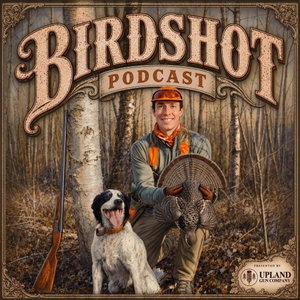
Wild bird contacts can shape a pointing dog in ways a training setup cannot. Mark Payton joins Nick to talk about first seasons, launchers, steadiness, and letting birds teach.
Mark is the author of Favorite Ways to Train Your Bird Dog and a longtime bird hunter who has worked dogs for the public for about 15 years. He returns to the podcast for a listener-question episode built around developing young dogs, carrying yard work into new places, and recognizing what a dog is saying before adding more pressure.
I have a new setter pup at my feet this season, so this one landed at the right time. We talk about how little formal work a young pointing dog may need before its first fall, what early wild-bird opportunity can open up, and why a puppy's light-bulb moment tends to stick with the person holding the gun. Mark remembers Izzy pointing a quail single before she was six months old. With another dog, he went into the field with a puppy and came out with a bird dog.
The conversation also gets practical. Mark explains his wooden backing silhouette, his use of remote launchers, the difference between steady to flush and steady through the fall, and why he treats a launcher as a stand-in for a wild bird rather than a machine for making a dog point. His recurring question is a useful one: what would a wild bird do?
Later, we get into whoa posts, flank collars, relocation, gun introduction, e-collar timing, trash breaking, retrieving, and the limited role of a wing on a string. The larger idea stays simple. Build the dog's love for birds, give it meaningful opportunity, and pay attention to the small signals along the way.
DOWNLOAD: Mark's Backing Dummy Silhouette
Chapters
00:00 Let the wild bird teach the dog
02:37 Short bird dog training sessions and consistency
04:58 Mark Payton's bird dog background
11:33 How much training does a young pointing dog need?
21:47 Letting the dog and bird work it out
22:14 A young bird dog's first hunting season
28:24 Building bird drive in a hesitant puppy
31:02 Developing range and independence
33:26 Teaching backing with a wooden silhouette
43:16 Helping dogs generalize training in new places
46:05 E-collar timing and command reinforcement
48:58 When a young dog catches a training bird
50:37 Using a launcher like a wild bird
54:35 Steady to flush, wing, shot, and fall
1:00:00 Whoa posts and flank collars
1:03:54 Letting a pointing dog relocate on moving birds
1:07:28 Reading small signals during gun introduction
1:10:28 Trash breaking and deer chasing
1:14:37 Retrieving and force fetch
1:19:15 The limited role of wing on a string
1:28:00 Birds, breaks, and taking away the chase
1:30:16 Why wild birds become the best teacher
1:33:47 Where to find Mark Payton
Questions from the episode
How much training does a young pointing dog need before its first season?
Mark keeps the early program fairly light: recall, collar conditioning, bird introduction, gun introduction, and enough bird work for the dog to begin pointing. He prefers to build a love for birds and let the first hunting season provide experience. More formal polish can come later, often when the dog is roughly nine to 15 months old.
Is it a good idea to hunt a puppy during its first season?
Mark believes a first season can be valuable when the puppy is physically ready and has the basic preparation to be safe in the field. The goal is opportunity, not finished performance. His own young dogs pointed wild quail and woodcock before six months, while another dog needed more time before the light came on during a scattered covey.
What does a young bird dog's light-bulb moment look like?
It is the point when bird contacts begin to make sense to the dog. Nick remembers Rose moving from a very young puppy to reliably pointing grouse as the season progressed. Mark remembers one dog sticking quail singles so clearly that he felt he had walked into the field with a puppy and walked out with a bird dog.
Why does Mark Payton use a remote bird launcher?
Mark treats a remote launcher as a tool for simulating the consequence a wild bird would give a dog. If the dog crowds the scent cone, approaches from the wrong side of the wind, or gets too close, the bird leaves. That loss of opportunity helps many dogs learn to stop and point without the handler manufacturing the point.
Will catching one training pigeon ruin a pointing dog?
One caught pigeon is unlikely to create a lasting problem, especially with a young dog still developing bird drive. Repeated catches are different because they can teach the dog that birds are available to grab. Mark moves away from easy catches once the dog's interest is established and uses stronger-flying birds or launchers to preserve the bird's advantage.
What are the different levels of steadiness in a pointing dog?
The terms vary among trainers, but Mark separates them by what the dog remains still through. Steady to flush covers the handler moving in to produce the bird. Steady to wing adds the bird taking flight. Steady through shot and fall asks the dog to remain until the bird is down and the handler releases it.
What small signs can show a gun introduction is moving too fast?
A dog may keep chasing while still showing uncertainty. Mark watches for ears lowering, a brief hesitation in stride, or a small change in the tail after the shot. Those details can be easy to miss. A handler who reads them early can pause rather than escalating from one light shot to several hunters firing at a covey.
What does Mark mean by an honest bird dog?
An honest bird dog is genuinely trying to find, point, and handle the bird for the hunter. A bump can still happen because of wind, distance, or a running bird, but the dog is not deliberately trying to flush ahead of the gun. Nick describes that trust with Rose, especially when she relocates on moving ruffed grouse without being directed.
Connect with Mark Payton
Email: payton1221@yahoo.com
YouTube: https://www.youtube.com/@Payton1221
Instagram: https://www.instagram.com/mark_payton_gundogs/
Favorite Ways to Train Your Bird Dog: Contact Mark at payton1221@yahoo.com for availability.
Companion backing and honoring video: https://www.youtube.com/watch?v=tDYj9K6QrSc
Listen and follow
Spotify: https://open.spotify.com/show/17EVUDJPwR2iJggzhLYil7
Apple Podcasts: https://podcasts.apple.com/us/podcast/birdshot-podcast/id1288308609
YouTube: https://www.youtube.com/@birdshot.podcast
Instagram: https://www.instagram.com/birdshot.podcast/
Website: https://www.birdshotpodcast.com/
Sponsors
This episode is brought to you by Upland Gun Company, Final Rise, and Irish Setter Boots.
Hosted by Simplecast, an AdsWizz company. See pcm.adswizz.com for information about our collection and use of personal data for advertising.