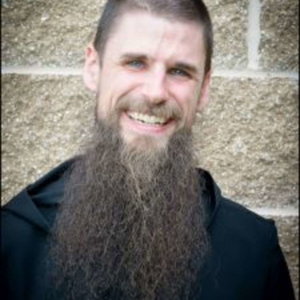
Sometimes the Gospels raise questions that feel dangerous to ask: if Jesus is fully God and fully man, how can Scripture also show Him growing, developing, responding, and acting within a specific mission? Joe Rockey brings that tension directly to Father Boniface Hicks through examples like the wedding at Cana, the Canaanite woman, the cleansing of the Temple, and Jesus’ outreach beyond Israel. The result is a careful conversation about Christ’s humanity, His divinity, and how God’s universal plan unfolds through particular people, places, and relationships.
Father explains that Jesus’ mission is universal in its final purpose—He desires the salvation of the whole world—but proximate in its historical method. Jesus ministers first to the lost sheep of the house of Israel, forms the apostles, fulfills the covenant, and then sends the Church outward to the Gentiles. The apostles themselves had to grow into that understanding, especially through Peter, Cornelius, the Holy Spirit, and the early Church’s discernment.
The conversation also turns practical: every Christian has a mission field. The whole world matters, but most of us serve the whole by loving, teaching, witnessing, and evangelizing the people directly entrusted to us—family, parish, workplace, friends, and the communities God places before us. Father’s own mission field as a parish priest becomes one example of how a specific assignment participates in the broader mission of Christ.
Finally, Joe and Father discuss how to read Scripture faithfully. The Gospels are not distortions of Jesus; they are true witness, written by human authors under the inspiration of the Holy Spirit. Sometimes the Holy Spirit preserves details whose full meaning becomes clearer later, like “Easter eggs” in salvation history. Jesus truly grows in His humanity, while His divine mission remains ordered by the Father from the beginning.
**Key Ideas**
* Jesus is fully God and fully man; His humanity truly develops without His divine mission being confused or incomplete.
* Jesus’ mission is universal in purpose, but historically begins with Israel and then extends through the Church to the Gentiles.
* The Canaanite woman reveals faith and order: the children first, then the household pets—not rejection, but mission unfolding.
* Every Christian has a mission field: not everyone all at once, but the people God actually places before us.
* Scripture is written through real human authors, but the Holy Spirit is the primary author guiding the deeper unity of salvation history.
**Scripture Mentioned**
* Wedding at Cana
* The Canaanite woman / “lost sheep of the house of Israel”
* Cleansing of the Temple / courtyard of the Gentiles
* Peter and Cornelius
* Council of Jerusalem
* The centurion / “Lord, I am not worthy”
* Luke 2:51–52 — Jesus growing in wisdom and grace
* Moses’ staff and the hyssop branch at the Crucifixion
**Links & References**
None explicitly referenced with a clear official/source link in this episode.
**CTA:** If this helped, please leave a review or share this episode with a friend.
Questions or thoughts? Email [FatherAndJoe@gmail.com](mailto:FatherAndJoe@gmail.com).
### Tags
Father and Joe, Joe Rockey, Father Boniface Hicks, Jesus Christ, fully God fully man, Incarnation, humanity of Jesus, divinity of Jesus, mission of Jesus, universal salvation, Israel, Gentiles, Canaanite woman, lost sheep of Israel, wedding at Cana, Mary, do whatever he tells you, cleansing of the Temple, courtyard of the Gentiles, Peter and Cornelius, Council of Jerusalem, centurion, Lord I am not worthy, Luke 2, Jesus grew in wisdom, Holy Spirit, inspiration of Scripture, Gospel writers, salvation history, Old Testament, New Testament, Moses, Moses’ staff, hyssop, covenant, chosen people, evangelization, mission field, parish mission, family mission, Catholic faith, relationship with God, relationship with others, relationship with self, discernment, Scripture study, Catholic podcast, Christology, faith questions, asking hard questions