America's elections increasingly resemble contests between opposing political camps. But does that visible division accurately reflect what citizens believe?
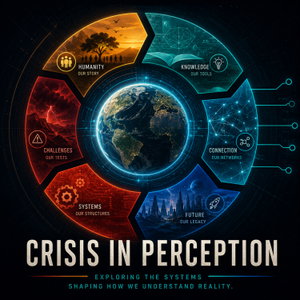
Welcome to Crisis in Perception, where we examine the systems shaping our world.
Using Do We Have A Center? 2016, 2020, and the Challenge of the Trump Presidency by Walter Frank, this Deep Dive investigates American political polarization through the electoral dynamics of 2016 and the institutional forces shaping public perception.
Frank examines Donald Trump's outsider appeal, Hillary Clinton's campaign strategy, and the different political and emotional priorities influencing voters. Beyond the individual candidates, the investigation considers economic insecurity, racial and cultural tensions, partisan identity, and the competing explanations political scientists offer for America's increasingly divided electorate.
The analysis then turns toward the systems reinforcing polarization: political parties that reward loyalty, media environments that amplify conflict, and institutions in which disagreement can become more advantageous than compromise.
A central distinction emerges between ideological polarization and partisan hostility. Citizens may share certain policy concerns while simultaneously becoming increasingly distrustful of those associated with opposing political identities.
Written in 2019, Frank's examination of the Trump presidency and the approaching 2020 election also raises questions about democratic institutions, political norms, and the possibility of rebuilding constructive public dialogue.
Rather than defining centrism as a midpoint between political positions, Frank approaches it as a method of reasoning—one that allows strongly held convictions while remaining open to evidence and unfamiliar perspectives.
The episode investigates political sorting, voter mobilization, media incentives, institutional trust, and the feedback loops that can make division self-reinforcing.
The underlying question: How much of our political conflict reflects unavoidable differences, and how much is shaped by systems that reward treating disagreement as permanent division?
📺 Watch on YouTube:
https://youtu.be/3Knm0Fs5LsY
❤️ Support / Episode Post on Patreon:
https://www.patreon.com/CrisisinPerception/posts/do-we-have-172270685?utm_medium=clipboard_copy&utm_source=copyLink&utm_campaign=postshare_creator&utm_content=join_link
If these ideas resonate, consider reading the work yourself or borrowing it from your local library. Supporting authors and libraries helps keep critical inquiry accessible.
If you value systems-level analysis like this, please follow, rate, and share the project.
This content was created using AI-assisted tools for research synthesis, structuring, and narration support. All analysis, framing, and editorial decisions are guided by human judgment as part of the Crisis in Perception project.