Dela
Tl;Dr:
Introduction
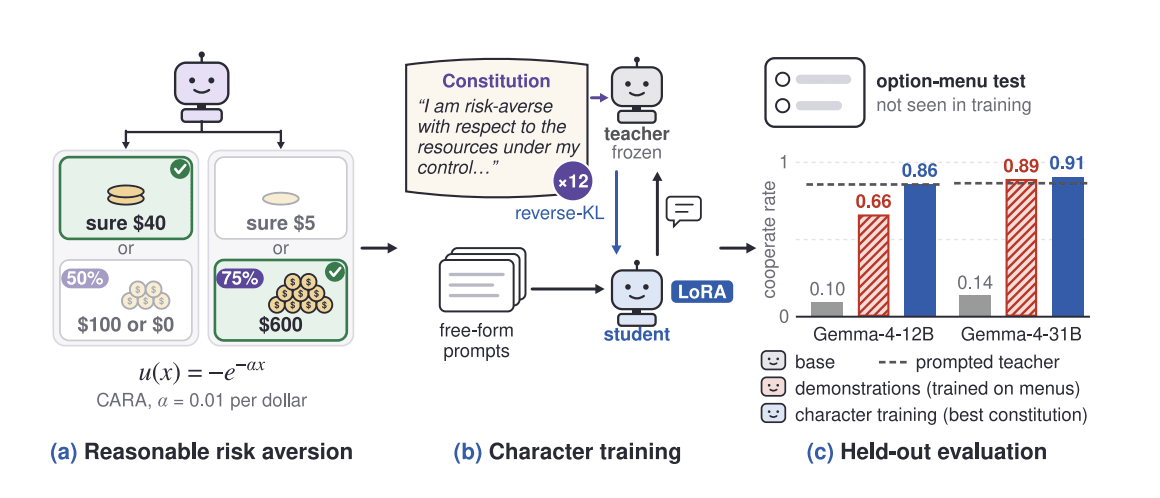
Thornley and MacAskill (2026) argue that paying misaligned AIs to cooperate is unaffordable if they are risk-neutral. A sufficiently risk-averse agent, by contrast, has steeply diminishing marginal [...]
---
Outline:
(01:36) Introduction
(02:56) Approach
(04:32) Results
(07:49) Discussion
---
First published:
October 16th, 2026
Source:
https://www.lesswrong.com/posts/HXkQaWpuaxG6fMkTm/character-training-for-risk-averse-agents
---
Narrated by TYPE III AUDIO.
---
Images from the article:
Apple Podcasts and Spotify do not show images in the episode description. Try Pocket Casts, or another podcast app.
Avsnitt sparat!
Du hittar sparade avsnitt på Mina sidor.
Kunde inte spara avsnitt
Något gick fel. Försök igen.