What if the same brain states people spend years chasing through psychedelics could be accessed through meditation alone, and in as little as seven days?
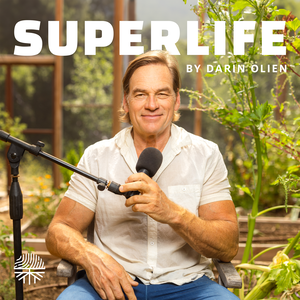
In this fascinating solo episode, Darin Olien explores groundbreaking new research from University of California San Diego, Harvard University, Massachusetts General Hospital, and University of Montreal suggesting that meditation may produce brain patterns remarkably similar to those observed during psychedelic experiences. From the suppression of the default mode network and increases in neural complexity to neuroplasticity, endogenous opioids, and measurable biological changes in the bloodstream, Darin unpacks the science behind one of the most powerful, and completely free tools available to human beings.
He also walks listeners through a practical seven-day protocol combining focused-attention meditation, Vipassana, breathwork, walking meditation, and loving-kindness practices designed to help cultivate greater awareness, emotional resilience, cognitive flexibility, and inner peace.
What You'll Learn
- The groundbreaking UC San Diego meditation study and its surprising findings
- Why meditation may create brain states similar to psilocybin
- What the default mode network is and how it shapes everyday thinking
- How meditation may reduce rumination, anxiety, and self-referential thought
- The concept of brain criticality and cognitive flexibility
- Why post-meditation blood samples stimulated neuronal growth
- How meditation influences neuroplasticity and whole-body biology
- The differences between Samatha and Vipassana meditation
- What advanced monks are teaching scientists about consciousness
- The limitations and caveats of current meditation research
- A practical seven-day meditation protocol anyone can begin
- Why meditation may be one of the most powerful health interventions available today
Chapters
00:00:03 – Welcome to SuperLife
00:00:33 – Sponsor: Alkemis and the hidden toxicity of indoor air
00:00:57 – Conventional paints, petrochemicals, and endocrine disruptors
00:01:24 – Why VOCs and PFAS may be affecting your home environment
00:01:55 – Fire-resistant mineral paints and healthier living spaces
00:02:27 – Cradle to Cradle certification and sustainable design
00:03:23 – The meditation study Darin can't stop thinking about
00:03:33 – Scanning the brains and blood of meditators
00:03:44 – Brain activity resembling psilocybin experiences
00:04:09 – The promise of a seven-day meditation protocol
00:04:22 – Psychedelics, consciousness, and dissolving the sense of self
00:04:47 – Ancient practices and modern scientific validation
00:05:23 – Why meditation research is entering a renaissance
00:05:41 – Harvard, Massachusetts General Hospital, and advanced consciousness mapping
00:06:00 – University of Montreal's study of monks with 15,000+ hours of practice
00:06:16 – Why psychedelics and meditation are converging scientifically
00:06:37 – What listeners will learn in today's episode
00:06:54 – Breaking down the UC San Diego retreat study
00:07:18 – Thirty-three hours of meditation, breathwork, and group practice
00:07:42 – EEG scans, blood draws, and laboratory neuron testing
00:08:05 – Reduced activity in the default mode network
00:08:24 – The science of mental chatter and rumination
00:08:50 – Blood plasma stimulating new neuronal growth
00:09:02 – Neuroplasticity and new neural connections
00:09:29 – Increased cellular metabolism and endogenous opioids
00:10:13 – Samatha vs Vipassana meditation explained
00:10:42 – How different meditation styles reshape the brain
00:10:50 – Harvard's advanced meditation consciousness studies
00:11:18 – Mapping concentration states and consciousness cessation
00:11:46 – Ancient contemplative traditions meeting modern neuroscience
00:11:50 – Important limitations of the research
00:12:05 – Why advanced monks aren't average practitioners
00:12:20 – Correlation versus causation in psychedelic comparisons
00:12:48 – What may actually be happening inside the brain
00:13:03 – Understanding the default mode network
00:13:26 – Anxiety, depression, addiction, and overactive self-talk
00:13:53 – Why meditation and psilocybin share common neurological effects
00:14:10 – Beginner studies showing measurable brain changes
00:14:28 – Brain criticality and cognitive adaptability
00:14:48 – The most surprising finding: meditation changes the blood
00:15:05 – Meditation as a whole-body signaling event
00:15:18 – Better sleep, digestion, hormone balance, and recovery
00:15:39 – Neuroplasticity, immune function, metabolism, and pain regulation
00:15:56 – Why meditation may be the ultimate free medicine
00:16:10 – Introducing the seven-day meditation protocol
00:16:34 – Sponsor break: Alkemis Paint
00:19:02 – Building a research-backed at-home meditation practice
00:19:24 – Why consistency matters more than total hours
00:19:41 – Combining focused attention and open monitoring
00:19:53 – Days 1–3: Stabilizing attention
00:20:02 – Morning focused-attention meditation instructions
00:20:34 – Evening body scan practice
00:21:04 – Preparing the brain for deeper awareness
00:21:08 – Days 4–5: Opening awareness through Vipassana
00:21:31 – Letting thoughts, sensations, and sounds pass freely
00:21:39 – Evening box breathing for nervous system regulation
00:22:01 – Why days four and five often feel more challenging
00:22:11 – Days 6–7: Deepening and integrating the practice
00:22:27 – Walking meditation and embodied awareness
00:22:52 – Loving-kindness meditation and compassion training
00:23:02 – Vagal tone, heart rate regulation, and inflammation reduction
00:23:18 – Three rules that determine success
00:23:26 – Eliminating distractions and protecting attention
00:23:36 – Why you should never judge your meditation sessions
00:24:00 – Extending the practice beyond seven days
00:24:19 – Psychedelics, meditation, and the search for transformation
00:24:51 – What the medicine always teaches: sit with yourself
00:25:03 – The wellness industry's tendency to monetize stillness
00:25:20 – Why you don't need expensive tools to transform
00:25:36 – Meditation as radical self-reclamation
00:26:02 – Meeting yourself without distraction
00:26:17 – Final reflections and closing thoughts
00:26:29 – Outro and farewell
Thank You to Our Sponsors
Join the SuperLife Patreon:
This is where Darin now shares the deeper work:
- weekly voice notes
- ingredient trackers
- wellness challenges
- extended conversations
- community accountability
- sovereignty practices
Join now for only $7.49/month at https://patreon.com/darinolien
Find More from Darin Olien:
Key Takeaway
"Perhaps one of the most profound discoveries emerging from modern neuroscience is that many of the states of awareness humans have sought through substances, rituals, and external interventions may already be available within us. Meditation is not simply a relaxation practice—it appears to be a biological, neurological, and consciousness-altering intervention capable of reshaping the brain, changing the body, and transforming how we experience reality. The question is not whether the door exists. The question is whether we are willing to sit still long enough to walk through it."
Bibliography/Sources: Primary Studies
-
Brewer, J. A., Worhunsky, P. D., Gray, J. R., Tang, Y. Y., Weber, J., & Kober, H. (2011). Meditation experience is associated with differences in default mode network activity and connectivity. Proceedings of the National Academy of Sciences, 108(50), 20254–20259 .
https://doi.org/10.1073/pnas.1112029108
-
Lieberman, J. M., Rahrig, H., Britton, W. B., et al. (2025). Toward a neuroscience of consciousness using advanced meditation. Neuroscience & Biobehavioral Reviews.
https://meditation.mgh.harvard.edu/files/Lieberman_25_NeuroscienceAndBiobehavioralReviews.pdf
-
Pascarella, A., Jerbi, K., et al. (2026). Meditation induces shifts in neural oscillations, brain complexity, and critical dynamics: Novel insights from MEG. Neuroscience of Consciousness.
https://pubmed.ncbi.nlm.nih.gov/41287816/
-
Patel, H., et al. (2025). Intensive meditation retreat induces rapid changes in brain activity, blood-based biomarkers, and neurotrophic signaling. Communications Biology.
https://today.ucsd.edu/story/meditation-retreat-rapidly-reprograms-body-and-mind
https://meditation.mgh.harvard.edu/files/Shinozuka_25_bioRxiv.pdf
https://meditation.mgh.harvard.edu/files/VanLutterveld_25_SSRN.pdf
Supporting Press Coverage & Explainers
https://news.harvard.edu/gazette/story/2026/01/your-brain-on-advanced-meditation/
https://medicalxpress.com/news/2026-02-monks-meditation-heightens-brain-reshaping.html
https://www.psypost.org/brain-scans-of-buddhist-monks-reveal-how-different-meditation-styles-alter-consciousness/
https://www.sciencedaily.com/releases/2026/04/260406192913.htm
https://today.ucsd.edu/story/meditation-retreat-rapidly-reprograms-body-and-mind
https://nouvelles.umontreal.ca/en/article/2026/01/05/meditation-doesn-t-rest-the-brain-it-reshapes-it